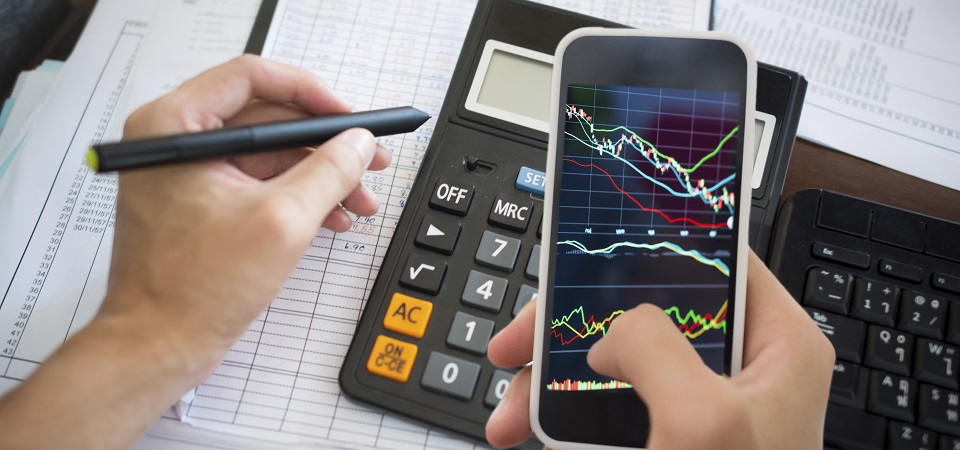
Making the Headlines Pay: How I Trade Using Financial Network News Services

In the fast-paced world of financial trading, information is the ultimate catalyst. A single earnings report, an unexpected interest rate announcement, or a sudden geopolitical development can send billions of dollars shifting across global markets in a matter of seconds. For a long time, high-frequency institutional traders held a monopoly on this rapid data flow. Today, however, individual retail traders can level the playing field by utilizing professional financial network news services.

Trading the news is not about gambling on random headlines; it is about building a structured system that turns raw data into executable market positions. Over years of navigating market volatility, I have developed a specific, disciplined approach to integrating real-time news services directly into my daily trading workflow.

Setting Up the Digital Trading Desk: Choosing the Right Feeds

To trade successfully using news services, you must understand that not all information sources are created equal. Relying … Read more

Banking Correspondents: Bridging the Gap in Global and Local Finance

The global financial system relies heavily on connectivity. Whether transferring money across international borders or trying to open a basic savings account in a remote rural village, individuals and businesses need a way to access banking infrastructure. However, building physical bank branches everywhere is incredibly expensive and logistically impractical.

Banking

To solve this problem, the financial world relies on a brilliant system known as banking correspondents. Operating at both the global corporate level and the grassroots community level, banking correspondents act as vital intermediaries. They extend the reach of established banks, driving financial inclusion locally and enabling seamless cross-border commerce internationally.

Defining the Dual Nature of Banking Correspondents

To fully grasp the concept of a banking correspondent, it helps to understand that this term exists in two distinct spheres of finance: international banking and local financial inclusion.

1. International Correspondent Banking

On a global scale, a correspondent bank is a financial … Read more

Radical Acceleration: How to Achieve Financial Freedom in 5 Years

The traditional blueprint for financial security is a slow burn. It tells you to work for forty years, diligently save ten percent of your income, invest it in conservative mutual funds, and finally enjoy your freedom in your mid-sixties. While this path is safe, a growing movement of professionals is asking a radical question: Why wait?

Achieving financial freedom does not have to take a lifetime. If you are willing to adopt an aggressive, highly disciplined strategy, you can compress a forty-year wealth-building timeline into just five years. This accelerated path requires more than just standard budgeting; it demands a total restructuring of your income, your spending habits, and your investment philosophy.

Year 1: The Foundation and Radical Lifestyle Auditing

The first twelve months are entirely about stabilization and breaking the cycle of lifestyle inflation. You cannot build a five-year tower of wealth on a shaky financial foundation.

Track and

Read more

Launching Your Career in Finance: The Power of a Bachelor of Science in Accounting

For many people, the word “accounting” brings to mind images of individuals sitting in isolated cubicles, endlessly entering numbers into green spreadsheets. This outdated stereotype completely misrepresents one of the most dynamic, versatile, and high-impact fields in the modern corporate world. Today, accounting is recognized as the universal “language of business,” and earning a Bachelor of Science (BS) in Accounting is one of the most secure ways to launch a successful, high-mobility career.

Unlike a general business degree, a Bachelor of Science in Accounting provides an intensive, rigorous framework that blends mathematical precision with strategic management. It equips students with the analytical tools needed to measure financial performance, guide executive decisions, and ensure regulatory compliance. Understanding the structure of this degree, its core curriculum, and the diverse career pathways it unlocks reveals why it remains a top choice for forward-thinking students.

What Defines a Bachelor of Science in

Read more

The Gold Standard of Journalism: Inside the Global Power of the Financial Times

In the hyper-fast world of global business, information is a critical currency. Every day, corporate executives, central bankers, politicians, and fund managers make decisions that move trillions of dollars. To navigate this high-stakes landscape, they rely on a shared source of truth that has guided the global economy for well over a century: the Financial Times.

Recognizable worldwide by its signature salmon-pink paper, the Financial Times (FT) is far more than a standard daily newspaper. It is an international institution, widely regarded as the gold standard of financial journalism, economic analysis, and geopolitical reporting. Understanding what makes the FT unique provides valuable insight into how the modern business world consumes information.

A Legacy Built on Independence and Integrity

Founded in London in 1888, the Financial Times started as a small publication competing with other financial sheets of the era. To distinguish itself visually from its main rival, the Financial Read more